Data Collector v3.0
BME68021.8 °C
Sensors connected
- Humidity64%
- Soil moisture38%
- CO₂812 ppm
Measures every minute
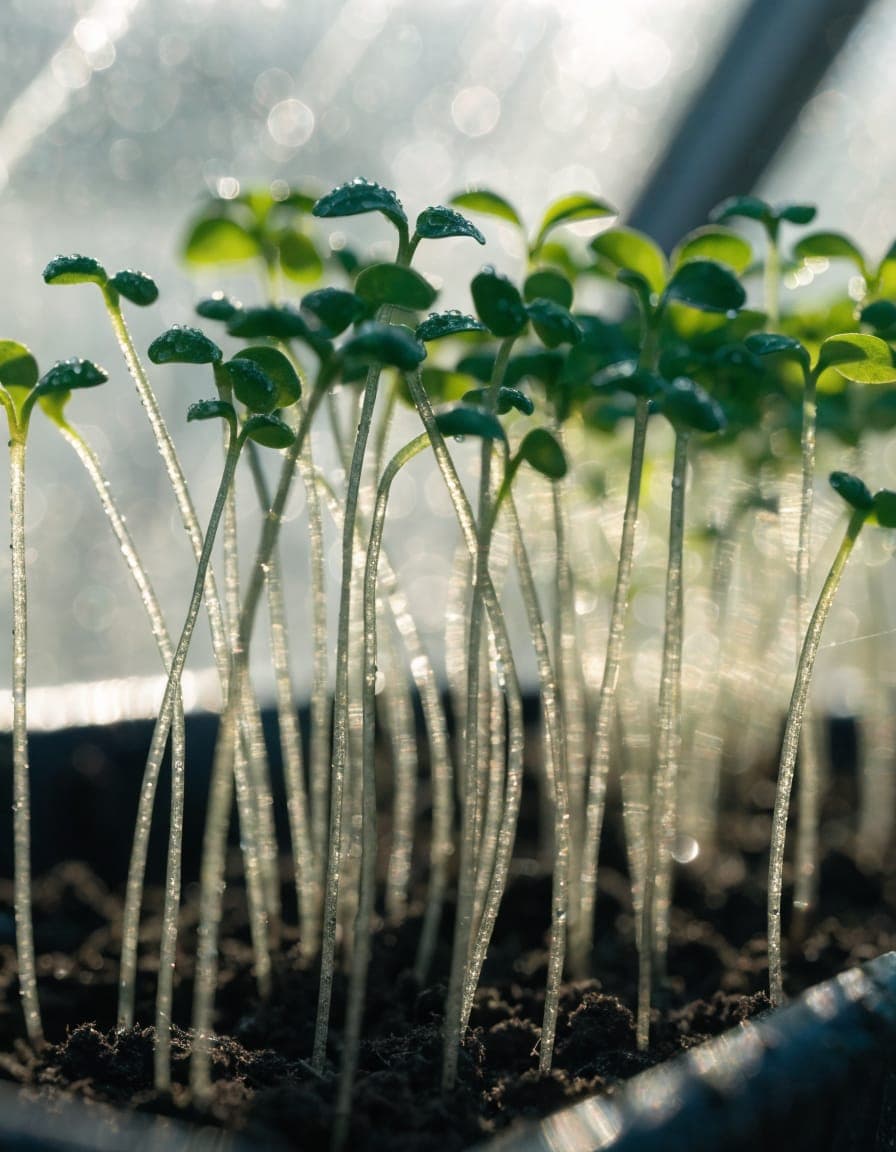
The Data Collector board sits under the seed tray and records seven variables — from temperature to soil moisture.
Botanical Bytes makes growth measurable
Double opt-in, no spam. By submitting you agree to storage — privacy policy
Awarded by & featured in



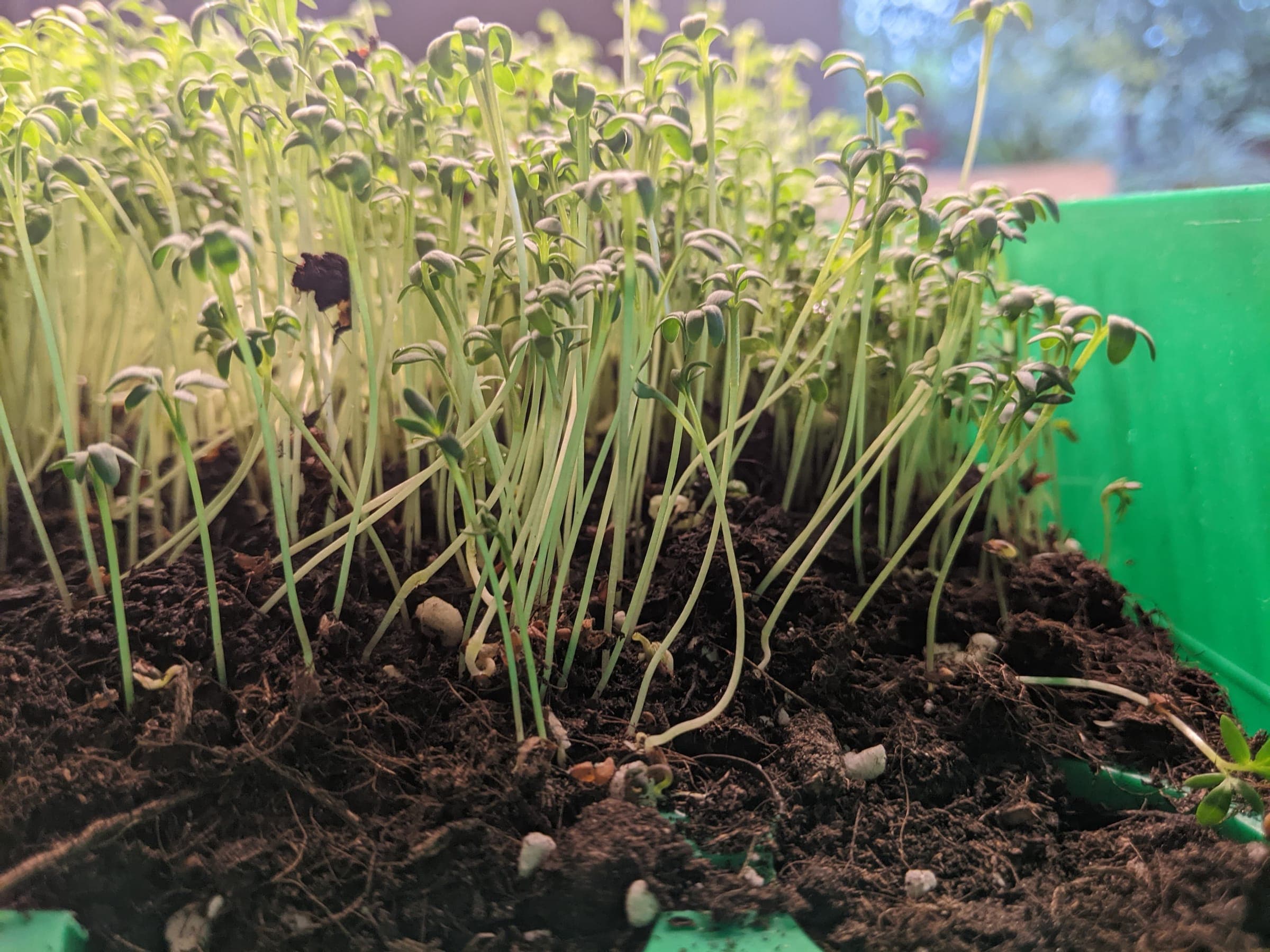
Temperature, humidity, CO₂, light, and soil moisture — every 60 seconds, to an SD card and the cloud.
Botanical Bytes measuring …
Temperature, humidity, CO₂, light, and soil moisture — every 60 seconds, to an SD card and the cloud.
Cycle 12 running
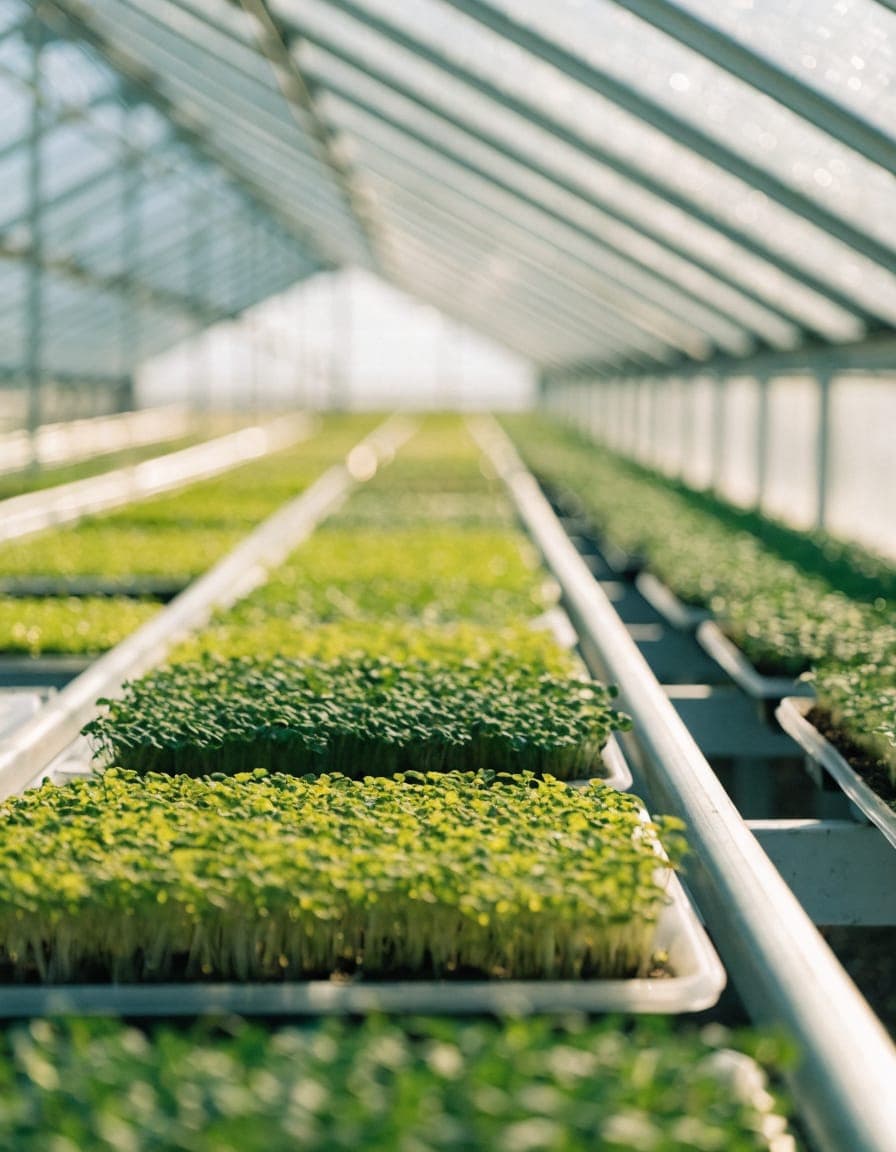
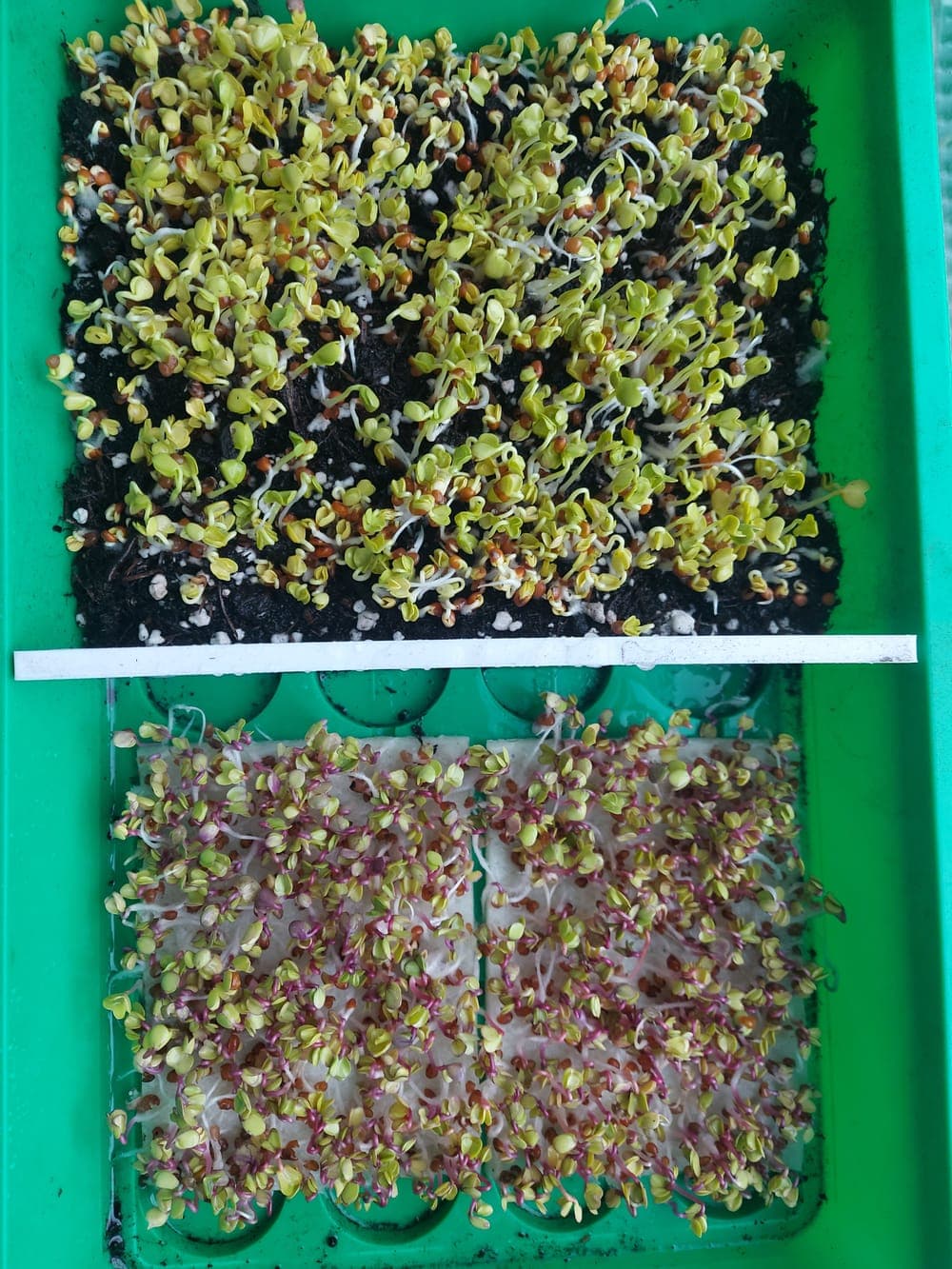
Follow every cycle live and step in only where a reading falls outside the expected range.
Follow every cycle live and step in only where a reading falls outside the expected range.
How did cycle 12 compare? How much water was optimal? The dataset is public — just ask it.
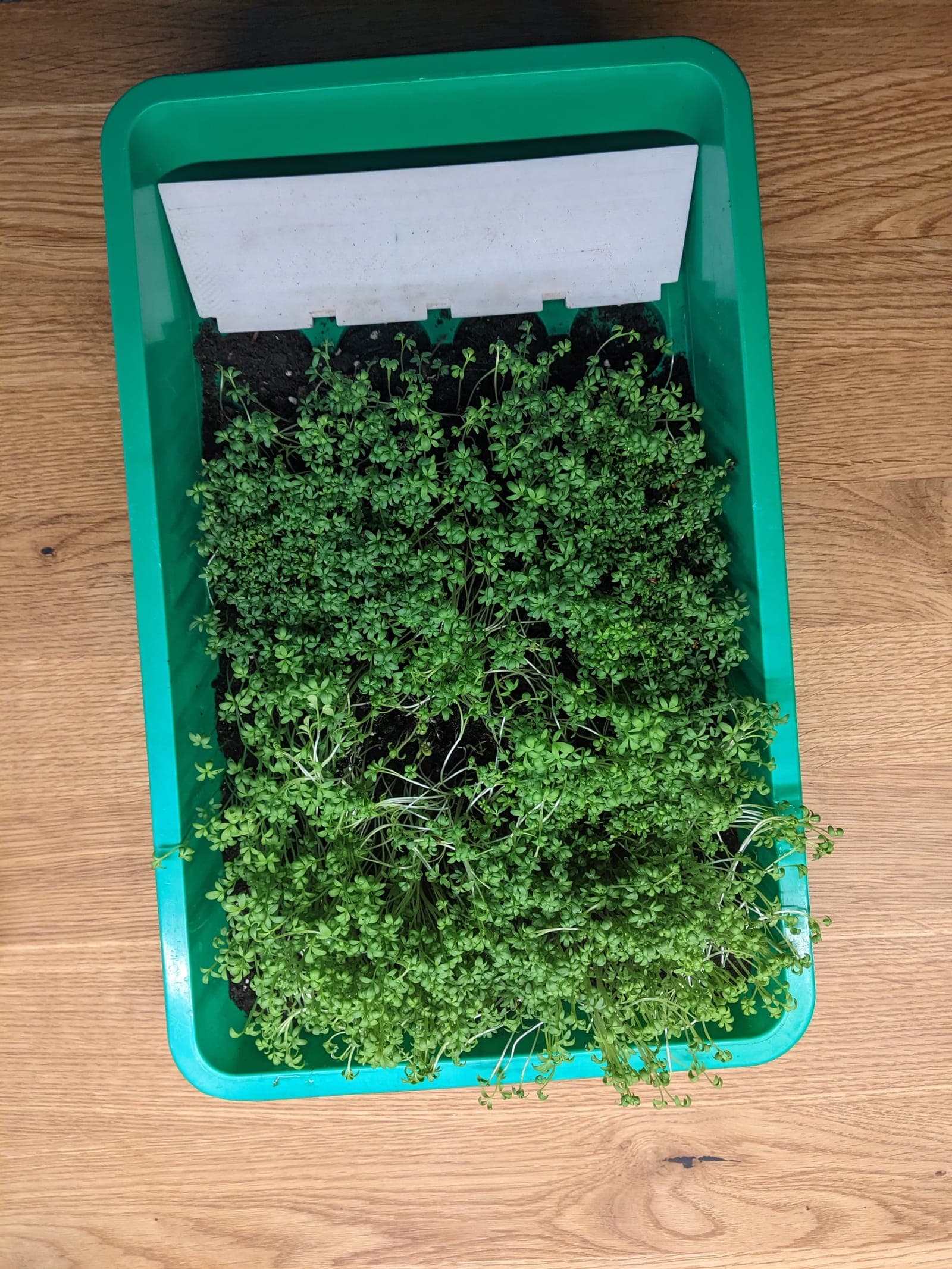
How did cycle 12 compare? How much water was optimal? The dataset is public — just ask it.
25%
Board design, firmware, the neural network, and a complete sample dataset are all on GitHub.
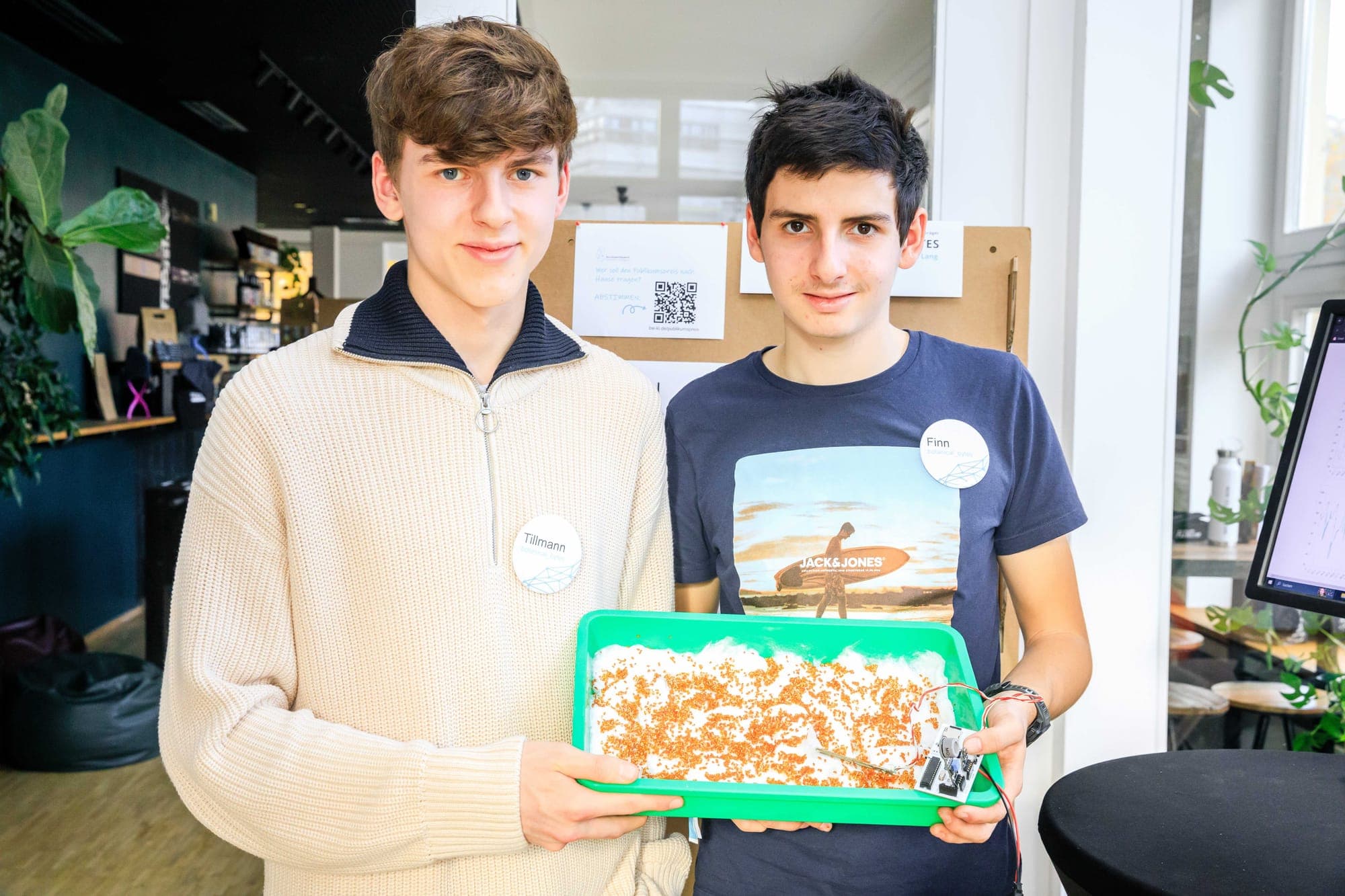
„Junior Prize at Germany's national AI competition.“
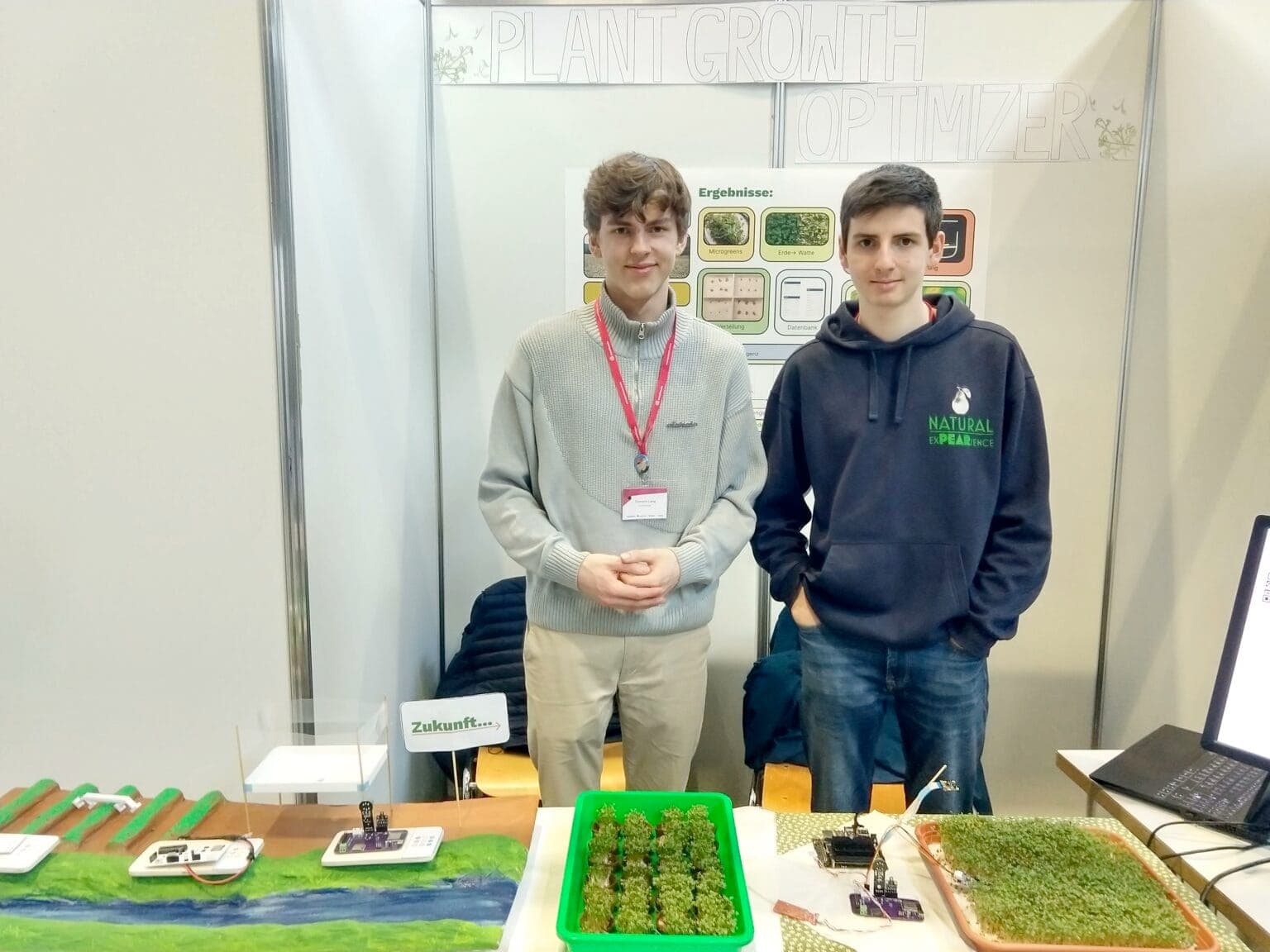
„Finalists in Tübingen with the Plant Growth Optimizer.“
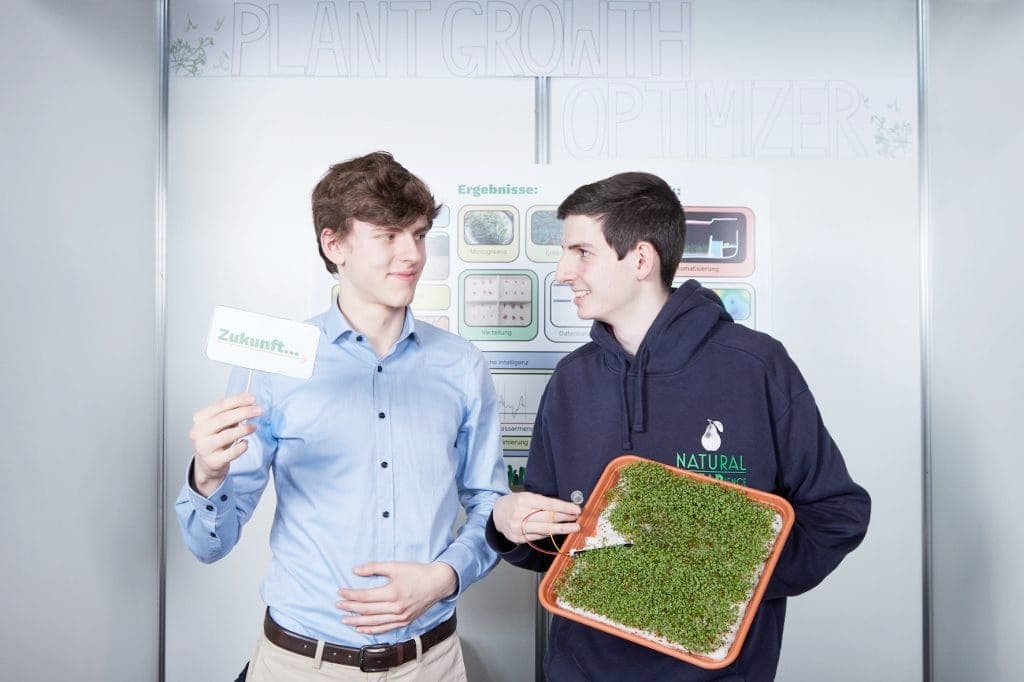
„Two special awards at the Jugend forscht state competition.“
Data Collector v3.0
Sensors connected
The Data Collector board sits under the seed tray and records seven variables — from temperature to soil moisture.
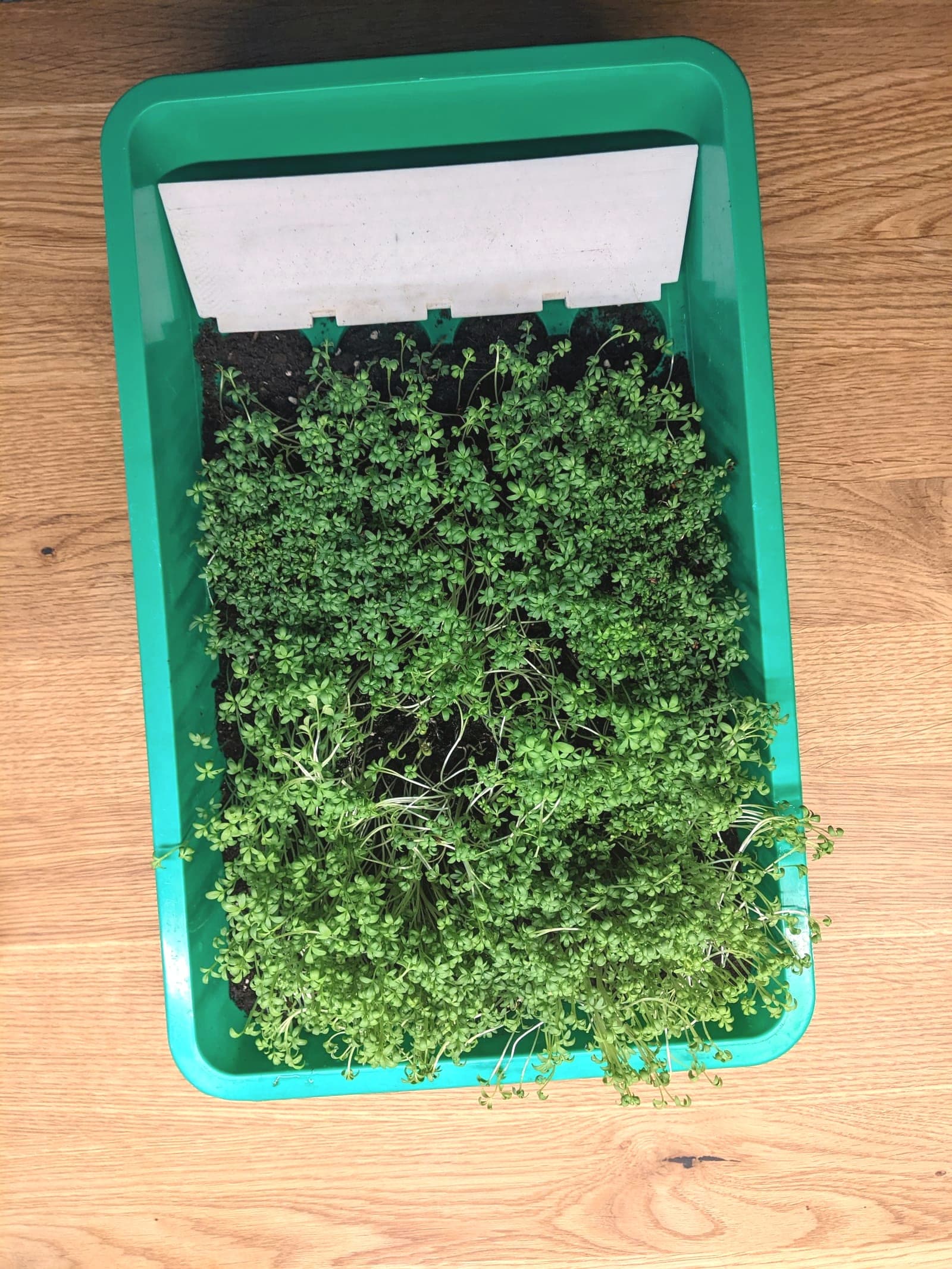
Sowing cycle 12
Cycle comparable
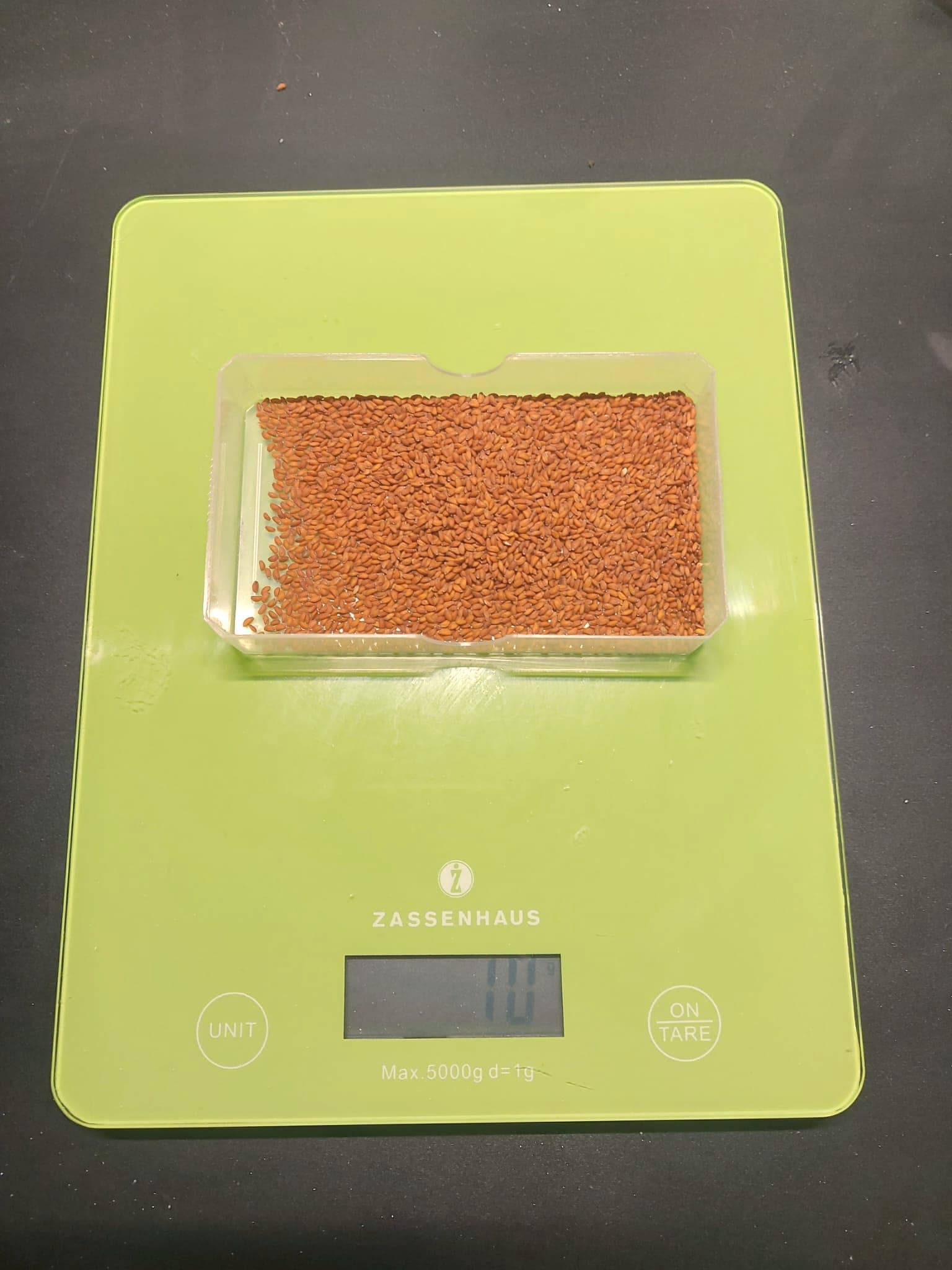
Standardized sowings — always exactly 10 grams of seed — make cycles comparable. The neural network learns how they relate.
Experiment 12
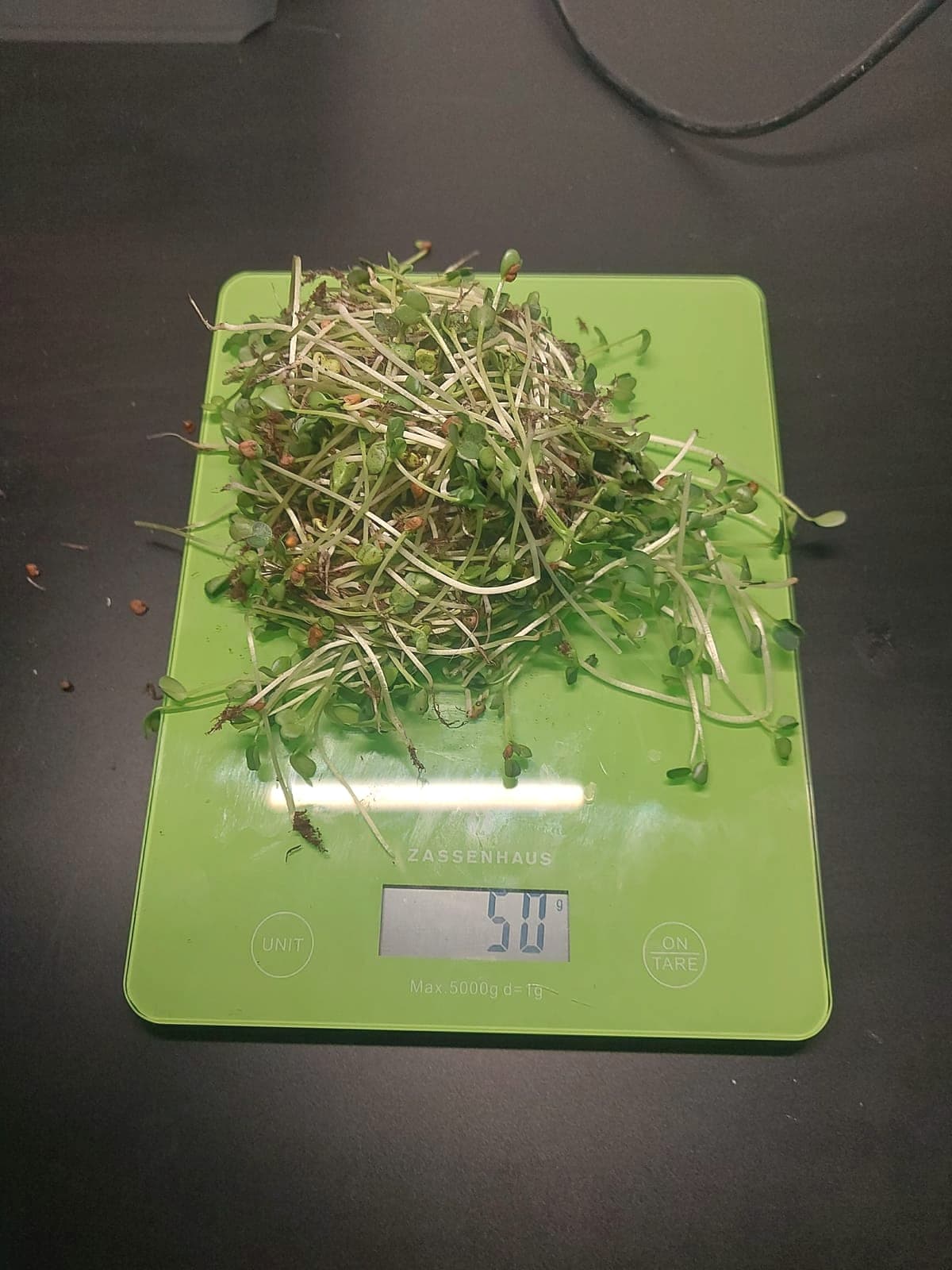
Yield weighed
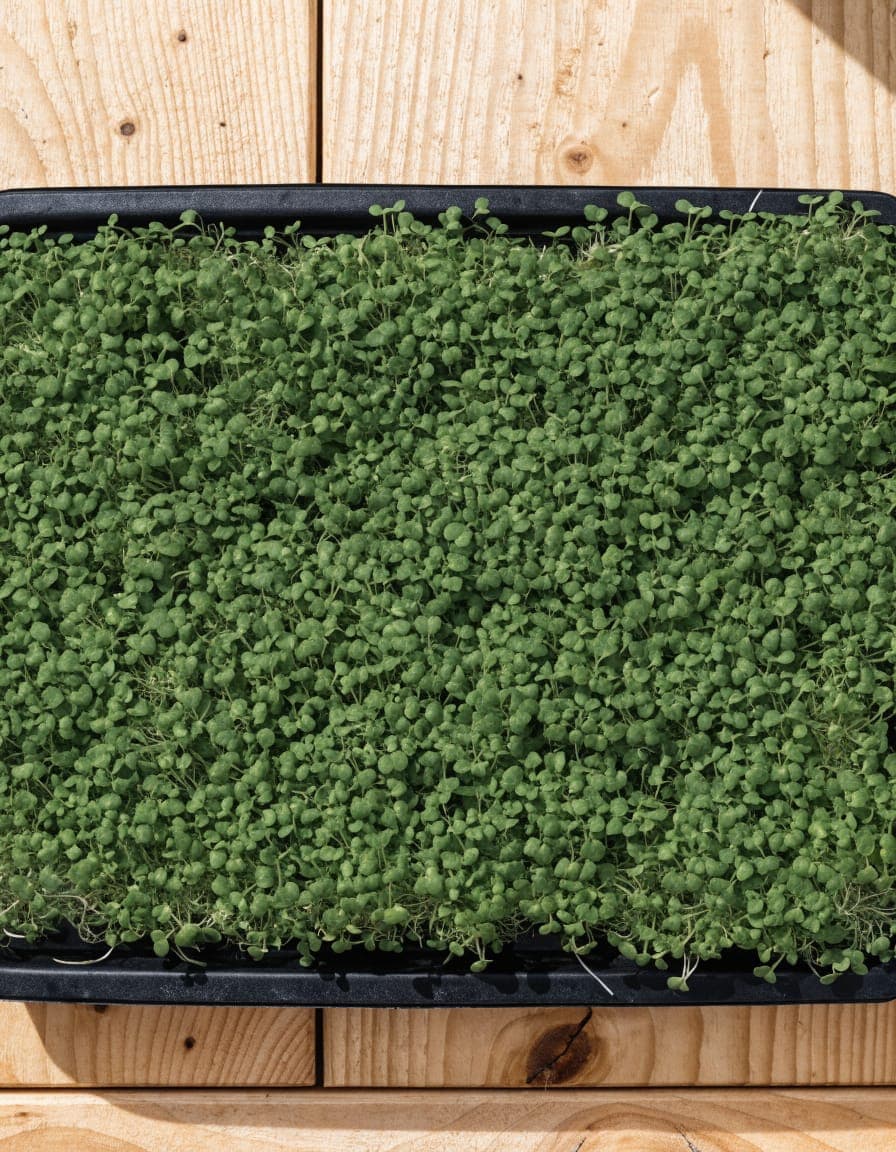
The data yields the optimal amount of water. The result: up to 25% more yield — and a system that gets smarter with every cycle.
Using OpenCV edge detection we analyze how seeds are spaced — spacing affects germination. The analysis is still done by hand.
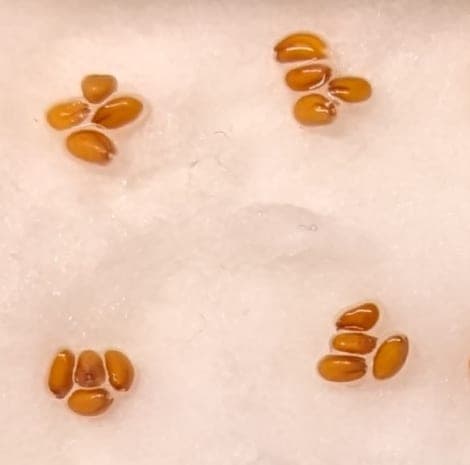
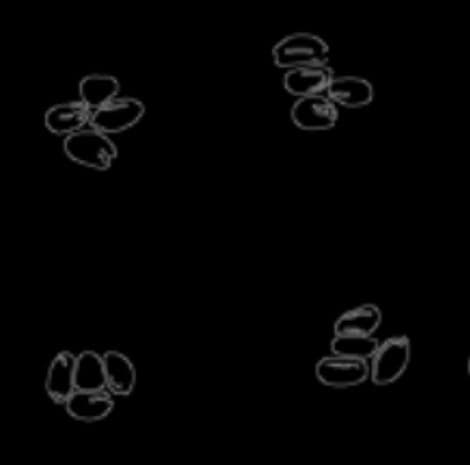
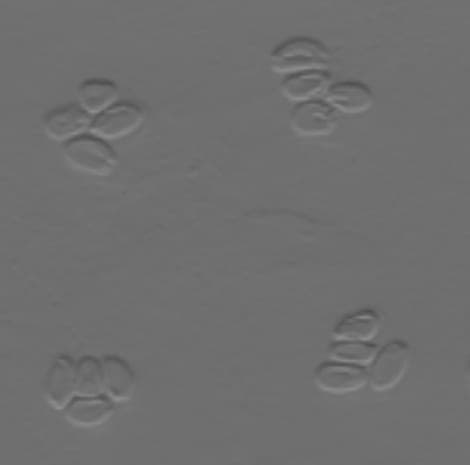
Board design, firmware, network, and dataset — all open on GitHub.
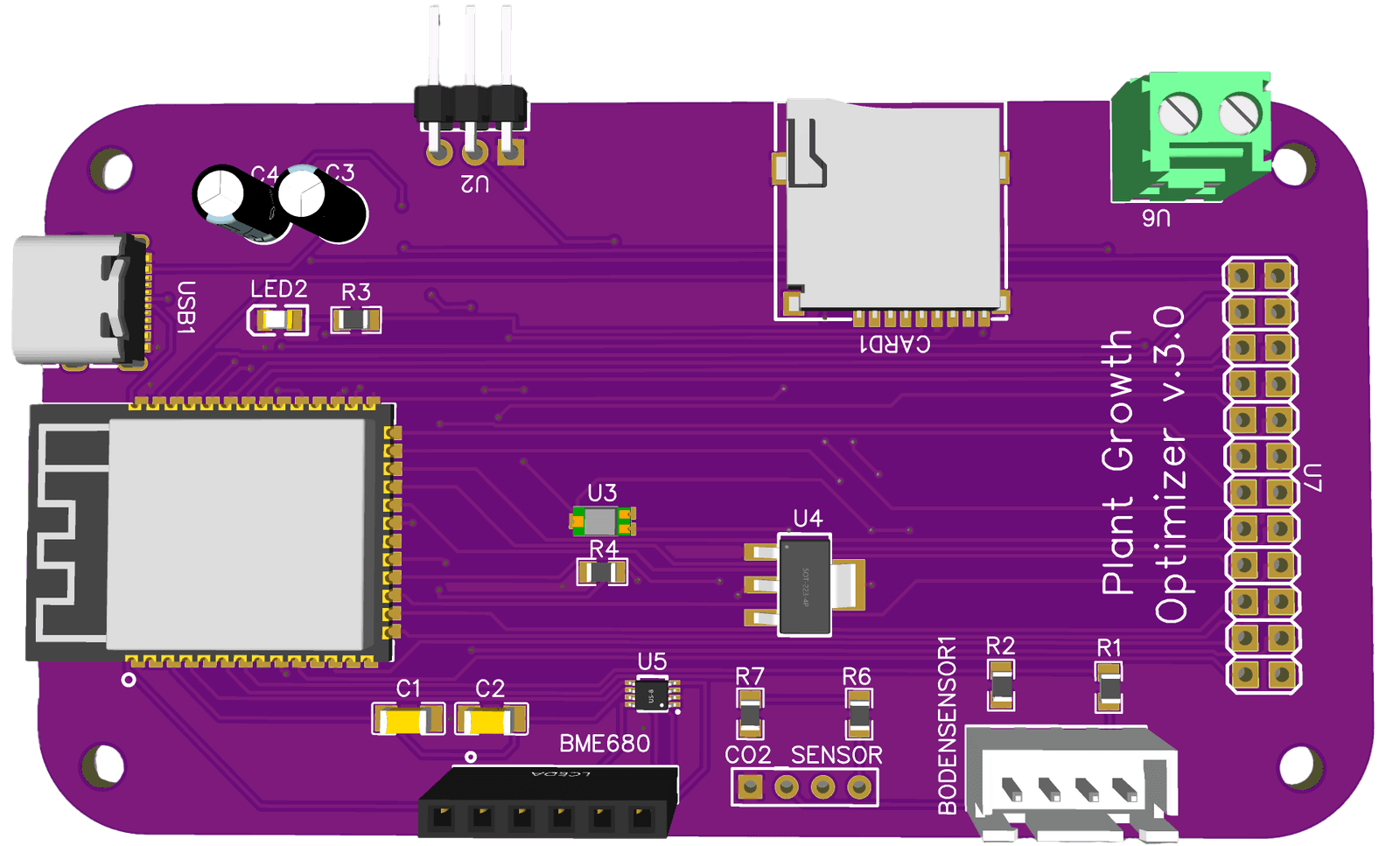
Our ESP32-S3-based Data Collector board measures temperature, air pressure, humidity, gas levels, CO₂, soil moisture, and brightness. The next generation adds pH and nutrient density — already designed, but it hadn't arrived by the 2024 deadline.
3D model from the board design · 59.3 × 36.7 mm
A student research project, started in 2023 for Germany's national AI competition (BWKI). We make plant growth measurable — with self-built sensor boards, standardized sowings, and a neural network.
No — not yet. Our current network predicts humidity from the other sensor channels. Real-time irrigation control is our stated goal and on the roadmap.
From experiments with the amount of water: we tested different amounts, weighed each harvest on a kitchen scale, and found the optimum. That was classic experimentation — not the neural network.
Because it grows fast. One logged cycle takes about 5.7 days and yields 8,182 rows of minute-by-minute data across six recorded sensor channels. We also test radish microgreens.
Temperature, air pressure, humidity, and gas levels (BME680), plus CO₂, soil moisture, and brightness. Every 60 seconds, to SD card and the cloud. The next board generation will add pH and nutrient density.
Yes. Board design, firmware, the neural network, and a full sample dataset are open on GitHub.
Double opt-in, no spam. By submitting you agree to storage — privacy policy